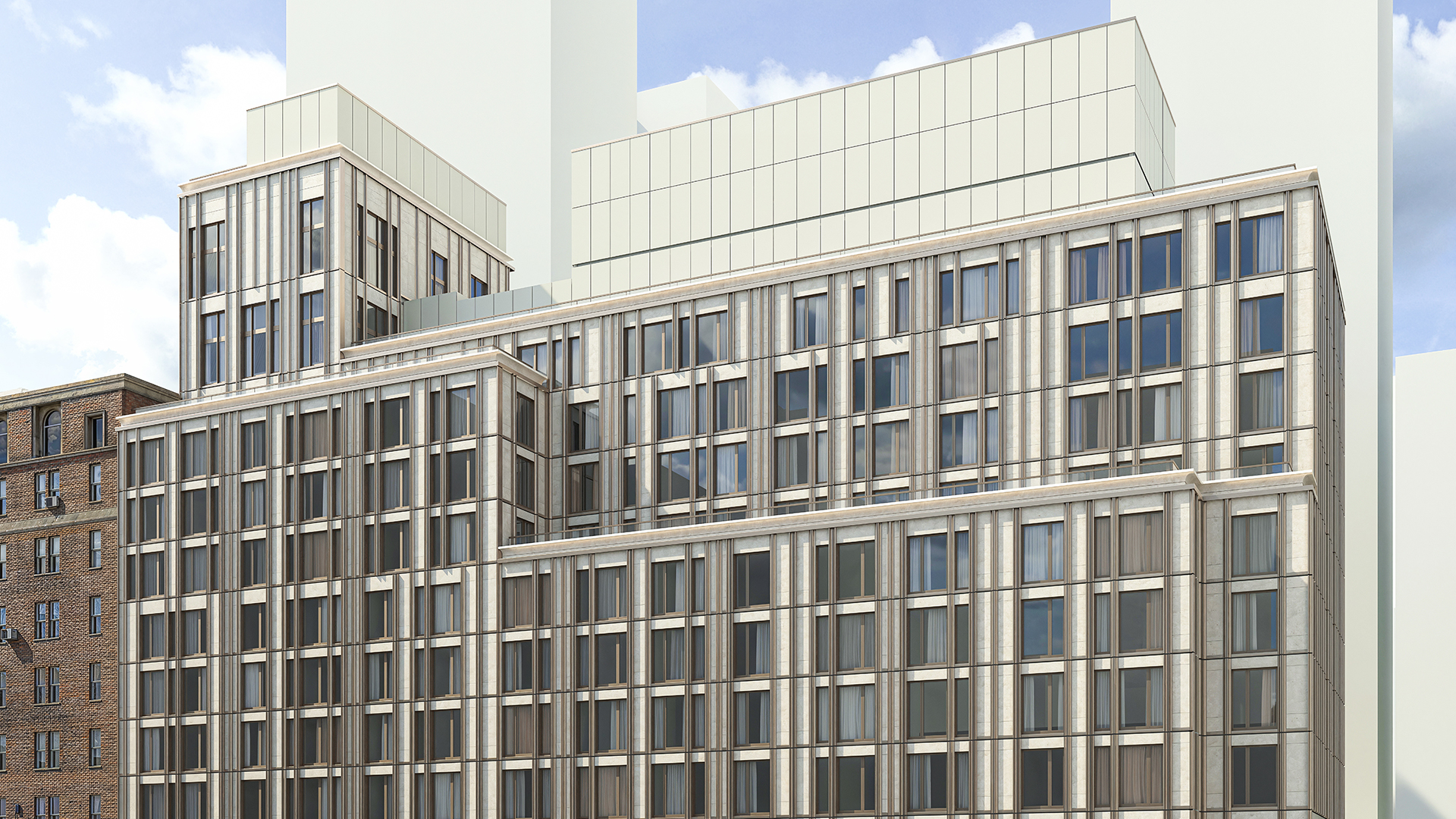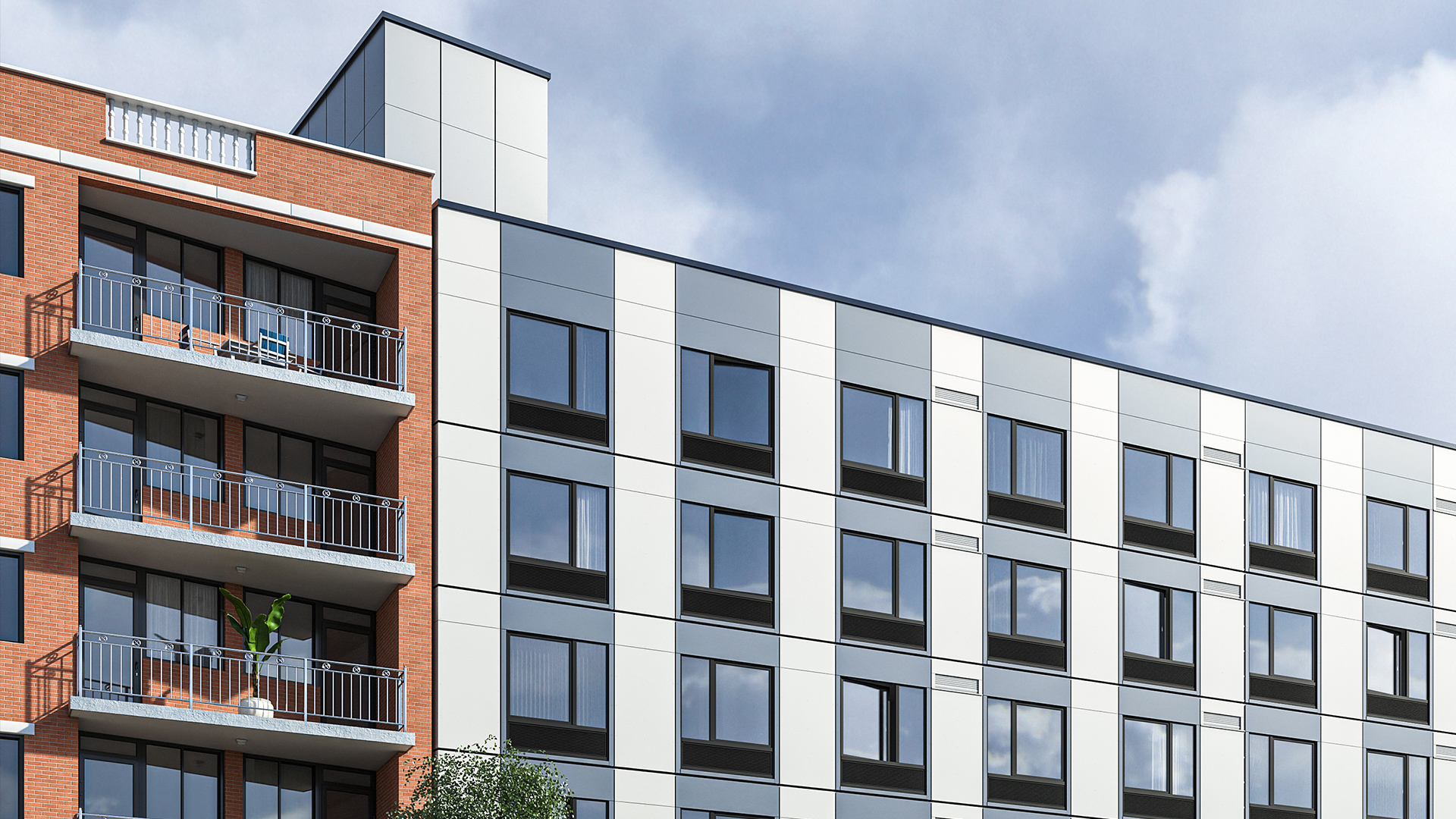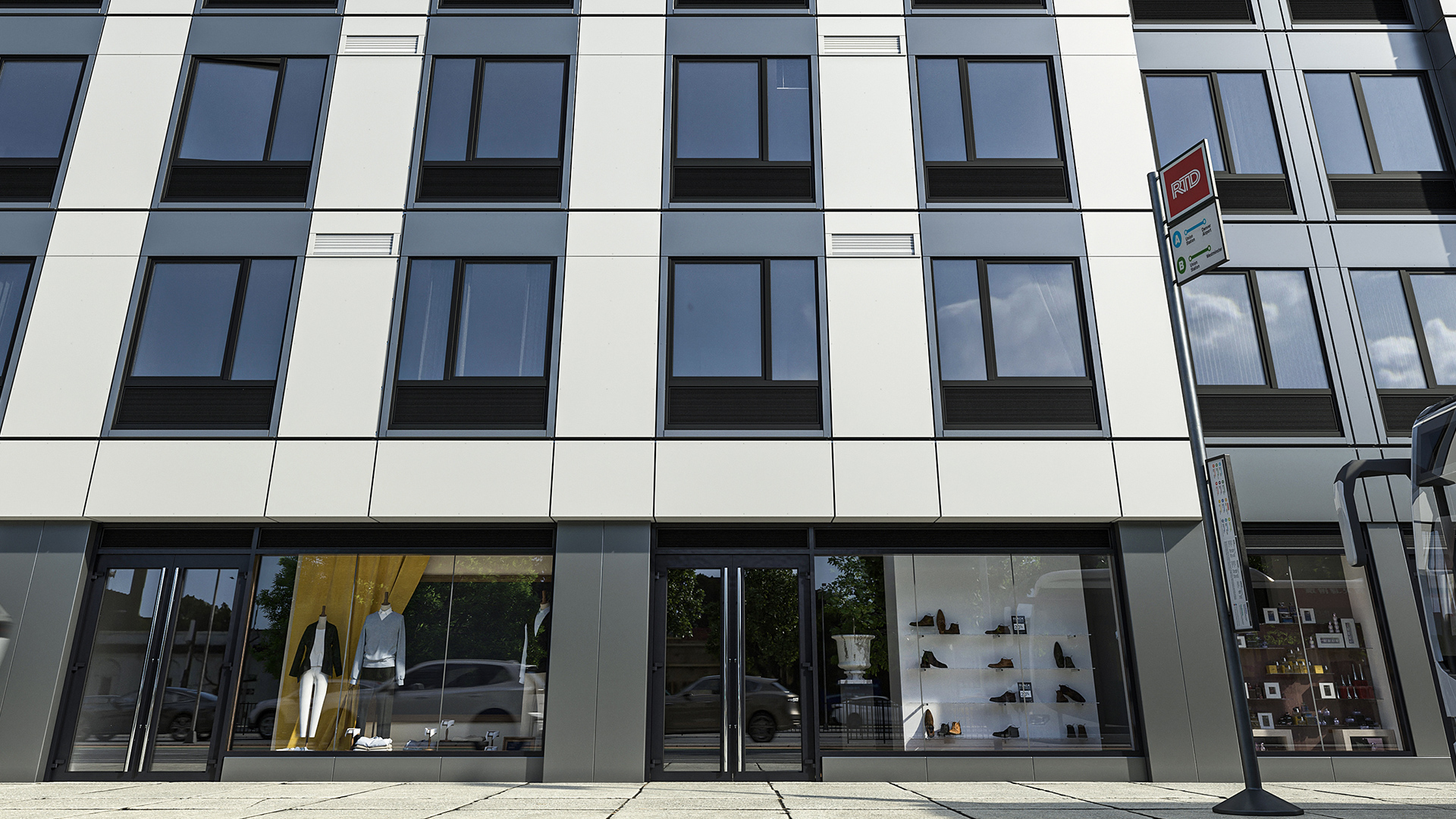
Light and air calculations are tracking exercises: how much of a room's floor area is glazed (Window-to-Floor Ratio), and how much of the facade's wall area is glazed (Window-to-Wall Ratio). Both numbers change with every facade module iteration. The problem is not calculating them — it's keeping them current as the design evolves without a full manual recalculation cycle each time.
What Light and Air Calculations Actually Measure — and Why They Reset After Every Facade Change
In building codes and zoning, "light and air" refers to the minimum glazed area required in habitable spaces — the threshold below which a room is considered too dark or poorly ventilated for legal occupancy. The calculation is straightforward: glazed area relative to room floor area, or glazed area relative to facade wall area. What makes it difficult on facade projects is that both inputs change whenever the panel module changes.
Every time a facade module is adjusted — narrower panels, taller spandrel zone, different window configuration — the glazed area per bay shifts, and the compliance ratios need to be rechecked. On a multifamily residential project in schematic design, architects typically cycle through three to five module configurations before the design is stable. Each iteration resets the L&A calculation. For more on how the spandrel and vision glass split defines glazed area per floor, see spandrel panel vs vision glass.
Three Metrics Drive L&A Compliance on Facade Projects — and Each Answers a Different Question
Three distinct metrics govern light and air compliance on most U.S. facade projects. Each applies to a different standard, and all three are affected by facade module changes.
Window-to-Floor Ratio (WFR) measures glazed area relative to the floor area of the room it serves. The NYC Zoning Resolution and NYC Building Code require habitable rooms to have windows covering at least 10% of the floor area, with at least 5% of floor area in operable windows for ventilation. IBC Section 1205 sets the minimums at 8% for light and 4% operable for ventilation. WFR is a habitability metric — it determines whether a room qualifies as habitable under zoning and occupancy rules.
Window-to-Wall Ratio (WWR) measures fenestration area relative to the gross above-grade wall area. ASHRAE Standard 90.1 sets the prescriptive maximum WWR at 40% for new construction — above that threshold, the prescriptive energy compliance path is not available and a performance-path analysis is required. WWR = Fenestration Area / Gross Wall Area. Unlike WFR, WWR is an energy performance metric that measures thermal exposure through the envelope.
Visible Light Transmittance (VLT) — also called Visual Transmittance (VT) — measures the fraction of visible light that passes through the glazing. According to the U.S. Department of Energy, VT is expressed between 0 and 1, with typical architectural glass ranging from 0.30 to 0.70. VLT matters because WFR counts glazed area geometrically — but a spandrel panel with ceramic frit at 90%+ coverage has near-zero effective VLT despite occupying the glazed zone. Geometry and light transmission are not the same number.
A fourth metric appears on LEED v4 projects: Spatial Daylight Autonomy (sDA300/50%), which replaces the older Daylight Factor. sDA measures the percentage of regularly occupied floor area that receives at least 300 lux from daylight alone for at least 50% of occupied hours, per ClimateStudio's LEED v4 daylight documentation. Unlike WFR and WWR, sDA requires a climate-based simulation — not a ratio calculation. It depends on facade orientation, glazing performance, and interior layout simultaneously.
Revit's Standard Scheduling Approach Requires Manual Recalculation After Every Facade Change
The structural limitation that drives manual L&A recalculation in Revit is a family parameter visibility rule: family parameters defined inside a Revit family do not appear in project schedules. Only Shared Parameters — parameters defined in an external .txt file and explicitly mapped to schedule fields — can be reported across multiple family instances. For window area tracking, this means every window family must carry a Shared Parameter for glazed area before that data can be scheduled.
Combining window area with room area — the two values needed for WFR — requires a further workaround. Revit has no built-in method to combine them in a single compliance schedule: window area lives in curtain wall family parameters, room area lives in room elements, and Revit's native scheduling engine treats these as separate categories that cannot be joined without a custom Shared Parameter setup. The model holds both values — but they live in separate schedules until additional work connects them.
The result on most projects: L&A compliance is tracked in a spreadsheet that references exported Revit data. Every facade change requires a fresh export, a manual ratio calculation, and an update to the external compliance document. The model and the compliance record stay permanently out of sync until someone recalculates. For context on how late-stage recalculation affects the LOD sequence, see what LOD architects need at each project stage.
What Manual L&A Recalculation Costs on a Facade Project
The direct cost is time per cycle: exporting window areas from Revit, updating WFR and WWR ratios per room and per facade orientation, and reconciling results against code thresholds. On a 15-floor multifamily building with multiple unit types and four facade orientations, a single recalculation cycle can consume several hours of a BIM coordinator's time. Over three to five SD iterations, that adds up before schematic design is complete.
The indirect cost is the lag between design decision and compliance check. Teams tracking L&A manually tend to run compliance at discrete milestones rather than continuously — which means a module change made mid-iteration may not be checked until the next review. When that check fails, the team either reverts the decision or redesigns the floor plate to compensate. Either path generates rework that compounds through the LOD sequence. For more on how rework multiplies when it reaches construction documents, see LOD 300 vs LOD 400.
Formula-Driven Parameters in Revit Panel Families Keep L&A Values Current Without Manual Recalculation
The parametric solution is to move the L&A calculation into the model — as formula-driven Shared Parameters inside the curtain wall panel family. When the parameters are formula-driven rather than manually entered, they recalculate automatically when the panel geometry changes. The Revit schedule stays current with the model without a separate export cycle.
The setup, following Revit's Shared Parameter workflow:
- The panel family carries a Shared Parameter for window glazed area, calculated as a formula: Window Width × Window Height
- The panel family carries a Shared Parameter for panel area: Panel Width × Panel Height
- WWR per panel is a derived parameter: Window Area / Panel Area
- These Shared Parameters feed a Revit schedule that aggregates glazed area by room, floor, or facade zone
When the panel module changes, the formula-driven parameters recalculate from the new dimensions. No export, no manual update. The schedule reflects the current design state. This approach does not automate compliance checking — the architect still compares scheduled values against WFR and WWR thresholds — but the data is always synchronized with the model. For how this connects to the curtain wall family architecture in Revit, see the previous article in this series.
How Kora Studio Panel Families Track L&A Data Through LOD 100 Facade Design
Light and air tracking in Kora Studio is not a standalone feature. It is a parametric output: Kora Studio panel families carry formula-driven dimension parameters — panel width, panel height, window width, window height — that feed calculated values into Revit schedules. As the facade grid evolves in schematic design, those parameters remain coordinated with the updated geometry without manual recalculation.
Kora Studio Grid Editor defines panel spacing and floor-to-floor module heights using formula-driven dimension fields inside Revit. The Window Editor configures the window unit within each panel using predefined window profiles; the resulting window dimensions feed the glazed area parameters that populate the L&A schedule. Kora Studio works exclusively with unitized curtain wall systems and supports two panel configurations: opaque panels and panels with a window. Full-height vision glass panels are outside Kora Studio's current scope.
Architects working with Kora Studio at LOD 100 can view a coordinated window area schedule in Revit throughout schematic design — not just at milestone exports — because the schedule parameters are formula-driven rather than manually entered. When the design direction is approved and the team transitions to LOD 300, those parameters carry forward. For more on what happens at that transition, see LOD 300 vs LOD 400.
For examples of how the parametric approach applies across project types, see Kora Studio facade project use cases.
If your team is recalculating L&A compliance manually after each facade iteration, the issue is model architecture — not calculation complexity. Book a demo to see what parametric L&A tracking looks like inside Revit at LOD 100.
FAQ
What is the difference between Window-to-Floor Ratio (WFR) and Window-to-Wall Ratio (WWR)?
WFR (Window-to-Floor Ratio) measures glazed area relative to the floor area of the room the window serves — it is a habitability and zoning metric. WFR answers the question: does this room have enough window area to qualify as a habitable space? WWR (Window-to-Wall Ratio) measures total fenestration area relative to the gross above-grade wall area of the facade — it is an energy performance metric. WWR answers: how much of the building envelope is glass? The two metrics apply to different standards: WFR to the NYC Zoning Resolution, IBC Section 1205, and local habitability codes; WWR to ASHRAE Standard 90.1 and energy codes. Both change when the facade module changes, but they measure different things against different thresholds.
What are the minimum window area requirements for habitable rooms under U.S. building codes?
Under IBC Section 1205, habitable rooms must have aggregate glazing area of at least 8% of the floor area, with at least 4% of the floor area in operable windows for natural ventilation. NYC requirements are more stringent: the NYC Zoning Resolution and NYC Building Code require windows covering at least 10% of the floor area for light, and at least 5% of the floor area in operable windows for ventilation. Requirements vary by jurisdiction — always verify against the authority having jurisdiction for the specific project. Note that these are geometric minimums based on glazed area; actual daylight delivery also depends on Visible Light Transmittance (VLT) of the glazing, facade orientation, and room depth.
Why does changing the facade module in Revit require recalculating light and air compliance?
Every facade module change shifts two values simultaneously: the glazed area per panel (because the window dimensions change relative to the panel dimensions) and the panel area itself (because the module spacing changed). Both values are inputs to WFR and WWR calculations. On most Revit projects without a purpose-built parametric parameter setup, window area lives in the curtain wall families and room area lives in room elements — and combining them into a single schedule requires a workaround. Without that setup, any change to the facade module requires exporting the updated window areas, recalculating the ratios manually, and updating the compliance record. The recalculation is not technically complex; it's the fact that it must be repeated manually at every iteration that makes it expensive on active design projects.
What is Spatial Daylight Autonomy (sDA) and how does it replace the Daylight Factor in LEED v4?
Daylight Factor (DF) is a static metric: it measures the ratio of indoor to outdoor illuminance under overcast sky conditions only. LEED v4 replaced DF with Spatial Daylight Autonomy (sDA300/50%) because DF does not reflect actual daylight variability — a building that scores well under overcast conditions may perform poorly under real climate conditions. sDA300/50% measures the percentage of regularly occupied floor area that receives at least 300 lux from daylight alone for at least 50% of occupied hours, calculated using a full climate-based daylight simulation that accounts for sun position, sky conditions, facade orientation, glazing VLT, and interior geometry. sDA requires simulation software — it cannot be derived from a ratio calculation alone. For facade projects pursuing LEED v4 daylight credit, sDA is the metric that governs, and it means glazed area alone (WFR) is insufficient — glazing performance, orientation, and layout all factor in.
How can parametric Revit panel families keep light and air calculations current without manual recalculation?
The approach is to carry glazed area as a formula-driven Shared Parameter inside the curtain wall panel family, rather than a manually entered value. A Shared Parameter for window area is defined as Window Width × Window Height — a formula that recalculates automatically when the panel dimensions change. A Shared Parameter for panel area is defined as Panel Width × Panel Height. A derived parameter for WWR per panel is Window Area / Panel Area. These Shared Parameters feed a Revit schedule that aggregates values by room or by facade zone. When the facade grid changes — module spacing, floor height, or window configuration — the formula-driven parameters update with the geometry, and the schedule reflects the current state without a separate export cycle. This does not automate compliance checking, but it eliminates the recalculation lag. For a full picture of how parametric families work in curtain wall workflows, see curtain wall families in Revit: system vs loadable.