




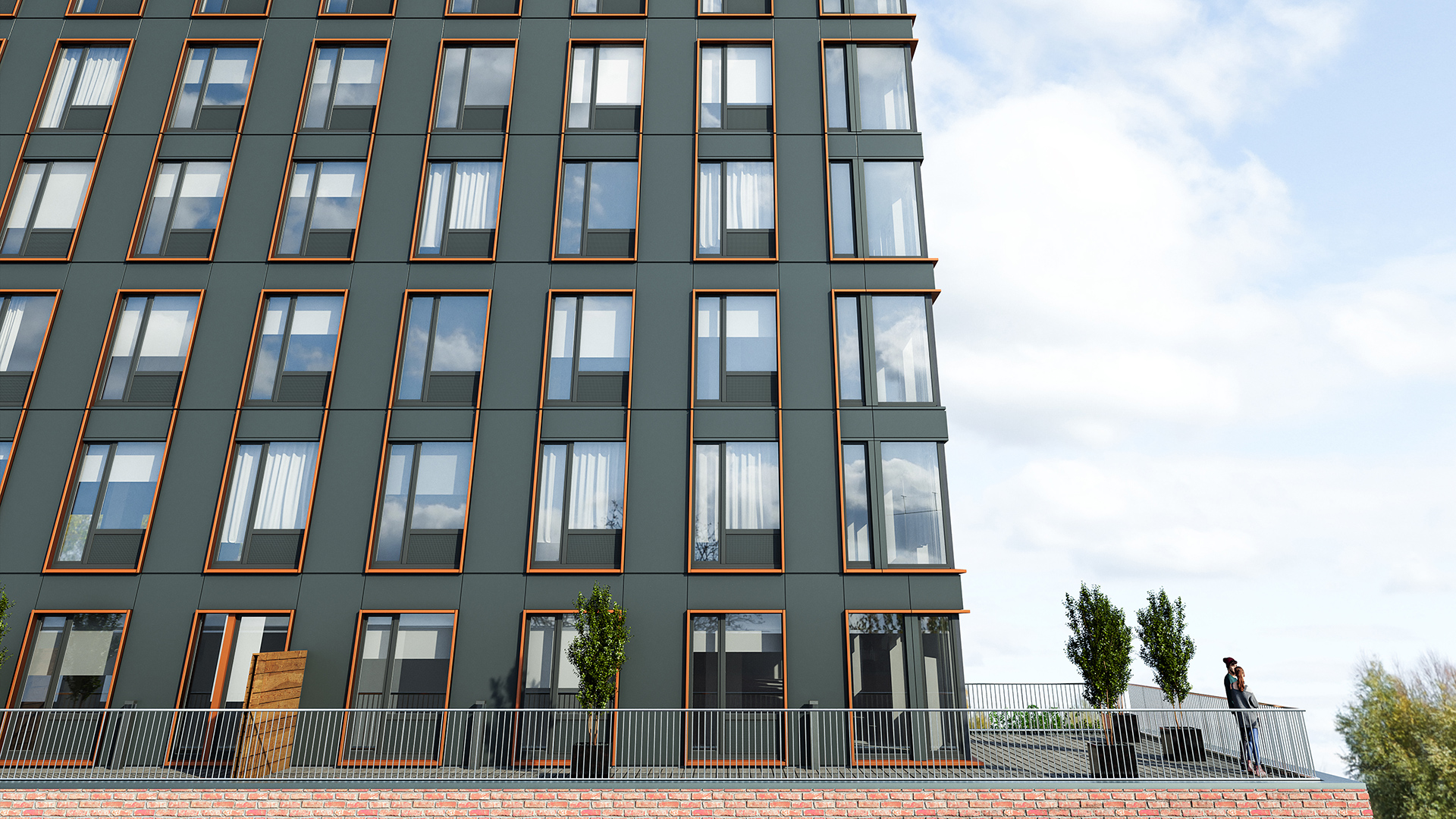

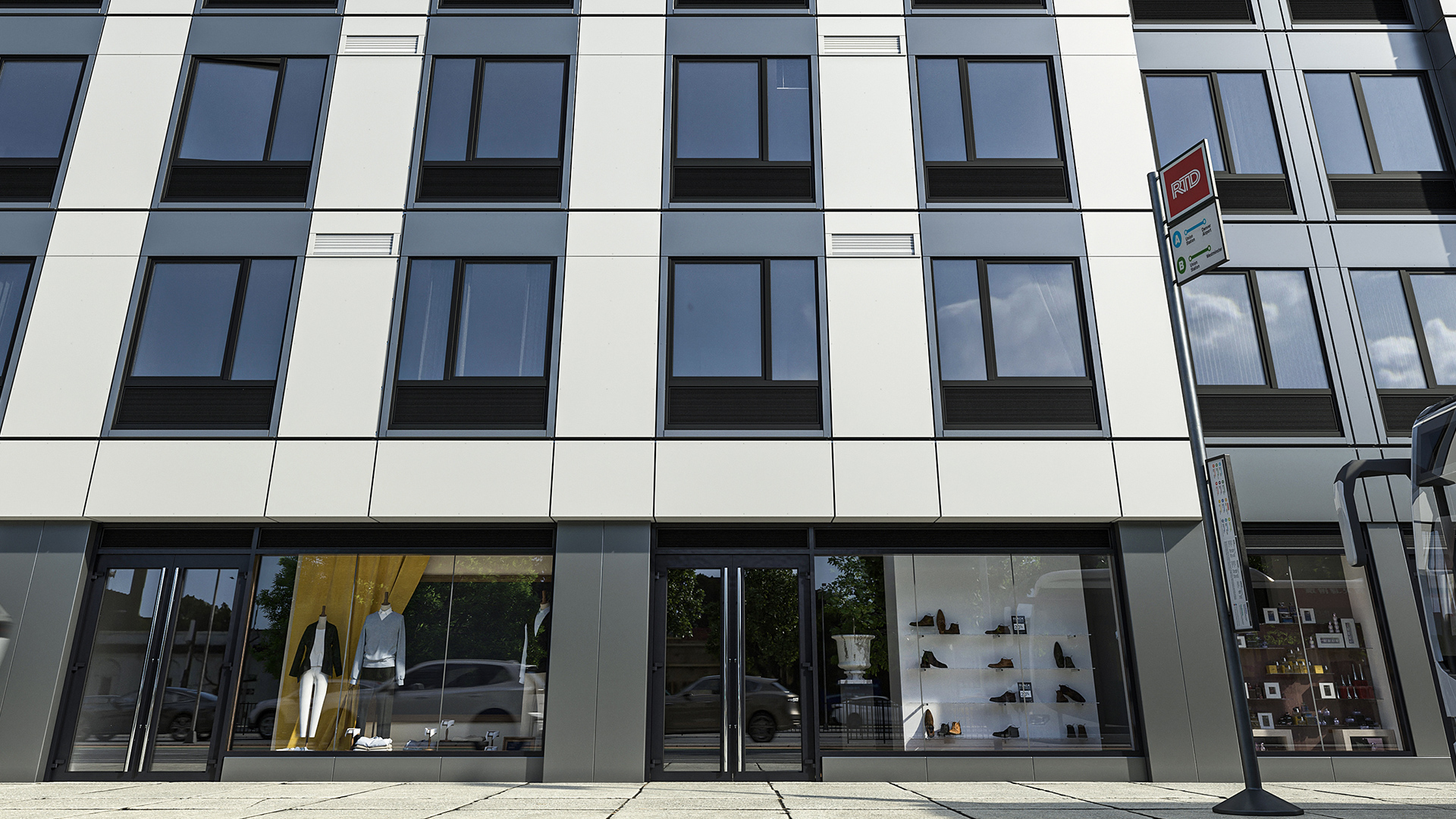
Dynamo for Revit is Autodesk's built-in visual programming environment that lets users automate tasks by connecting nodes into graphs — including facade panelization, parametric geometry, and curtain wall documentation. Kora Studio is a Revit-native facade design workflow that automates panel layout, module rhythm, material zones, and model coordination from LOD 100 through LOD 300 — without scripting, without nodes, without graph maintenance.
Both tools can change how architects handle facades in Revit. But Dynamo and Kora Studio require fundamentally different skill sets, impose different maintenance burdens, and serve different team structures. Architecture teams that default to Dynamo for every facade automation task often discover that building and maintaining custom graphs costs more time than the automation saves — especially when the team member who built the graph leaves or the next Revit version breaks node dependencies.
What Dynamo Does (and Does Well)
Dynamo ships free with every Revit license and provides a node-based visual programming canvas where users connect inputs, functions, and outputs into executable graphs. For facade work specifically, Dynamo can generate parametric panel patterns using mathematical sequences, randomize facade elements across elevations, automate curtain wall panel tagging and numbering, and create shading device geometry that responds to solar orientation data.
Dynamo's strength is flexibility. With packages like LunchBox, architects can panelize complex surfaces into grids, diamonds, or hexagonal patterns procedurally. Dynamo's Generative Design feature enables optioneering — testing multiple facade configurations against defined metrics and ranking outcomes automatically. For computational design teams with dedicated Dynamo specialists, Dynamo unlocks parametric control that standard Revit tools cannot match.
Dynamo also handles non-facade automation: renumbering sheets, extracting schedule data, placing families by coordinates, managing parameters across hundreds of elements. Dynamo is a horizontal tool — broad capability across every Revit domain, limited only by the skill of the person building the graph.
Where Dynamo Creates Friction for Facade Teams
Dynamo's power comes with three costs that most architecture teams underestimate: skill dependency, graph maintenance, and team scalability.
Skill dependency. Dynamo requires visual programming knowledge that most architects do not have. Building a facade panelization graph from scratch takes hours of node selection, connection logic, and debugging. The bigger the graph, the harder future extension becomes — a problem the Dynamo community calls "spaghetti graphs." When the one team member who understands the graph is unavailable, the automation stops and the team falls back to manual Revit modeling.
Graph maintenance. Dynamo graphs break. Revit version updates change API endpoints. Third-party packages like LunchBox update on separate schedules and sometimes introduce incompatibilities. A graph that worked in Revit 2024 may require node replacements in Revit 2025. Teams that invest weeks building custom facade automation in Dynamo often spend additional weeks maintaining those graphs across project lifecycles and Revit upgrades.
Team scalability. Sharing Dynamo graphs across a 15-person architecture team requires documentation, training, and ongoing support. Junior designers cannot modify a complex facade graph without risking the entire automation chain. The result: Dynamo facade automation often stays locked to one specialist, creating a bottleneck rather than removing one. For teams experiencing this pattern, the Revit facade tools comparison on the Kora Studio blog covers how purpose-built tools differ from general-purpose scripting.
What Kora Studio Does Instead
Kora Studio is a Revit-native facade design workflow purpose-built for the work most architecture teams actually do with facades — iterating on panel layout, exploring material zones, adjusting module rhythm, and keeping the Revit model coordinated through changes. Kora Studio requires no visual programming, no graph building, no package dependencies, and no dedicated scripting specialist.
Kora Studio's three editors — Grid Editor, Window Editor, and Panel Editor — provide guided interfaces for facade-specific tasks directly inside Revit. Kora Studio Grid Editor controls panel spacing and module rhythm across the entire facade without scripting grid logic. Kora Studio Panel Editor applies and swaps material zones across hundreds of panels simultaneously without building a node graph for each material assignment. Kora Studio Window Editor manages opening placement, sizes, and parameters through a direct interface rather than parametric formulas.
Architecture teams using Kora Studio report 68% faster design iterations, 84% fewer RFIs, and $42,000 saved per project on average — with savings scaling based on curtain wall scope, number of design iterations, and team size. Critically, any architect on the team can use Kora Studio on day one. No Dynamo training. No graph handoff documentation. No "ask the scripting person" bottleneck. The facade design in Revit guide explains how Kora Studio achieves fast iteration while preserving creative control.
Mid-Project Facade Change — A Real Scenario
On a 12-story multifamily project, the principal requests a revised panel rhythm and new material break at floors 6 through 9 — two days before a client presentation. The team has two paths.
Dynamo path: The computational designer opens the facade panelization graph built three months ago. The graph uses 47 nodes, references a LunchBox package, and includes custom Python Script nodes for material assignment. Updating the panel rhythm requires modifying input parameters, re-running the graph, and debugging two broken node connections caused by last month's Revit patch. The material zone change requires adding new conditional logic to the Python Script node. Total time: 4–6 hours, assuming the computational designer is available.
Kora Studio path: Any architect on the team opens Kora Studio inside the Revit project. Kora Studio Grid Editor updates module spacing across floors 6 through 9. Kora Studio Panel Editor applies the revised material zone to the affected panels. The Revit model stays coordinated — schedules, tags, and documentation update automatically. Total time: 20–30 minutes. No scripting specialist required.
Dynamo's graph produced excellent results three months ago. Kora Studio's guided workflow produces equivalent results in a fraction of the time without specialist dependency — and that difference compounds across every mid-project change the team encounters.
Dynamo vs Kora Studio — At a Glance
- Core approach: Kora Studio — guided facade workflow / Dynamo — visual programming environment
- Skill required: Kora Studio — any Revit user / Dynamo — visual programming + debugging
- Scope: Kora Studio — facade-specific (LOD 100–300) / Dynamo — any Revit task (horizontal)
- Maintenance: Kora Studio — zero graph maintenance / Dynamo — ongoing graph + package updates
- Team scalability: Kora Studio — entire team on day one / Dynamo — limited to graph creators
- Primary users: Kora Studio — architects, designers, BIM managers / Dynamo — computational designers, BIM specialists
- Cost: Kora Studio — early access (contact sales) / Dynamo — free with Revit
Can You Use Both?
Yes — and on projects with both standard facade iteration and custom parametric requirements, using Kora Studio and Dynamo together makes sense. Kora Studio handles the repeatable facade workflow — panel layout, module rhythm, material zones, and coordinated model output from LOD 100 through LOD 300. Dynamo handles the one-off parametric tasks that fall outside a guided workflow — custom shading device geometry, algorithmically driven pattern variation, or data-driven facade logic specific to one project.
Kora Studio and Dynamo are complementary when each tool handles what it does best. Kora Studio removes the 80% of facade work that does not require scripting. Dynamo handles the 20% that genuinely needs custom parametric logic. The Revit add-ins for architects comparison covers how workflow tools and scripting tools coexist in practice.
Which One Is Right for You?
Choose Dynamo if the architecture team has a dedicated computational designer, the project requires custom parametric geometry that no guided tool can produce, and the team accepts the ongoing cost of graph maintenance and version updates. Dynamo is free with Revit and genuinely powerful for specialist work.
Choose Kora Studio if the team needs faster facade iteration without adding scripting overhead — when the bottleneck is design speed and model coordination, not the absence of parametric geometry. Kora Studio works for the entire team on day one, with no training curve for visual programming and no risk of automation breaking with the next Revit update.
For teams evaluating whether their facade workflow needs scripting or a guided system, booking a Kora Studio demo takes 30 minutes. See the full range of Kora Studio use cases for architects, designers, and BIM managers working on facade-heavy projects.
FAQ
Does Kora Studio replace Dynamo for Revit?
No. Kora Studio replaces the need for Dynamo specifically for facade design iteration — panel layout, material zones, module rhythm, and model coordination. Dynamo remains valuable for custom parametric geometry, data extraction, and automation tasks outside the facade workflow that Kora Studio covers.
Do architects need to learn visual programming to use Kora Studio?
No. Kora Studio provides guided interfaces inside Revit — Grid Editor, Window Editor, and Panel Editor — that require no scripting, no node graphs, and no Dynamo experience. Any Revit user can operate Kora Studio on day one.
Is Dynamo better for complex facade patterns?
Dynamo is better for algorithmically generated geometry — patterns driven by mathematical formulas, solar data, or custom parametric rules. Kora Studio is better for the structured facade iteration that makes up most architectural facade work: grid logic, panel rhythm, material zones, and coordinated documentation across design changes.
What happens to Dynamo graphs when Revit updates?
Revit version updates frequently change API endpoints that Dynamo nodes depend on. Third-party packages like LunchBox update on separate schedules. Graphs that worked in one Revit version may require node replacements, package updates, or Python Script rewrites in the next version. Kora Studio updates are managed by the Kora Studio team and maintain compatibility with current Revit releases.
Who is Kora Studio designed for?
Kora Studio is designed for architects, designers, and BIM managers working on facade-heavy projects — multifamily residential, mixed-use developments, and large curtain wall scopes — who need faster design iterations inside Revit without scripting dependencies or specialist bottlenecks.


